
- Home
- >
- News
- >
- Product News
- >
- How to Choose the Right Car Tires for Wet Road Conditions
How to Choose the Right Car Tires for Wet Road Conditions
When driving on wet urban roads, once asphalt surfaces are covered with rainwater or mud, the grip of ordinary passenger car tyres will drop sharply, leading to longer braking distances. For drivers who frequently face rainy climates, mountain roads or unpaved roads, choosing a performance tyre designed specifically for wet surfaces is not just a simple upgrade, but a core decision related to driving safety.
The right tyre can turn potential risks on wet roads into a controllable driving experience, while the wrong choice may greatly increase accident risks and driving pressure. This article will take NEREUS TYRE NS317 pattern — a PCR tyre focused on wet performance — as an example to elaborate on scientific tyre selection methods.
Why Do Wet Roads Require Specialized Tyre Design?
The primary task of tyres for wet roads is efficient water drainage. NEREUS NEOPLUS NS317 — This is a high-quality passenger car tyre and a premium comfort tyre engineered for optimal ride comfort and driving stability. Its advanced tread pattern design delivers outstanding water evacuation performance, effectively preventing hydroplaning during rainy driving.
With precise handling performance combined with a quiet and comfortable driving experience, the NS317 — a highway terrain tyre — has become an ideal choice for mid-range cars and luxury sedan tyres users.
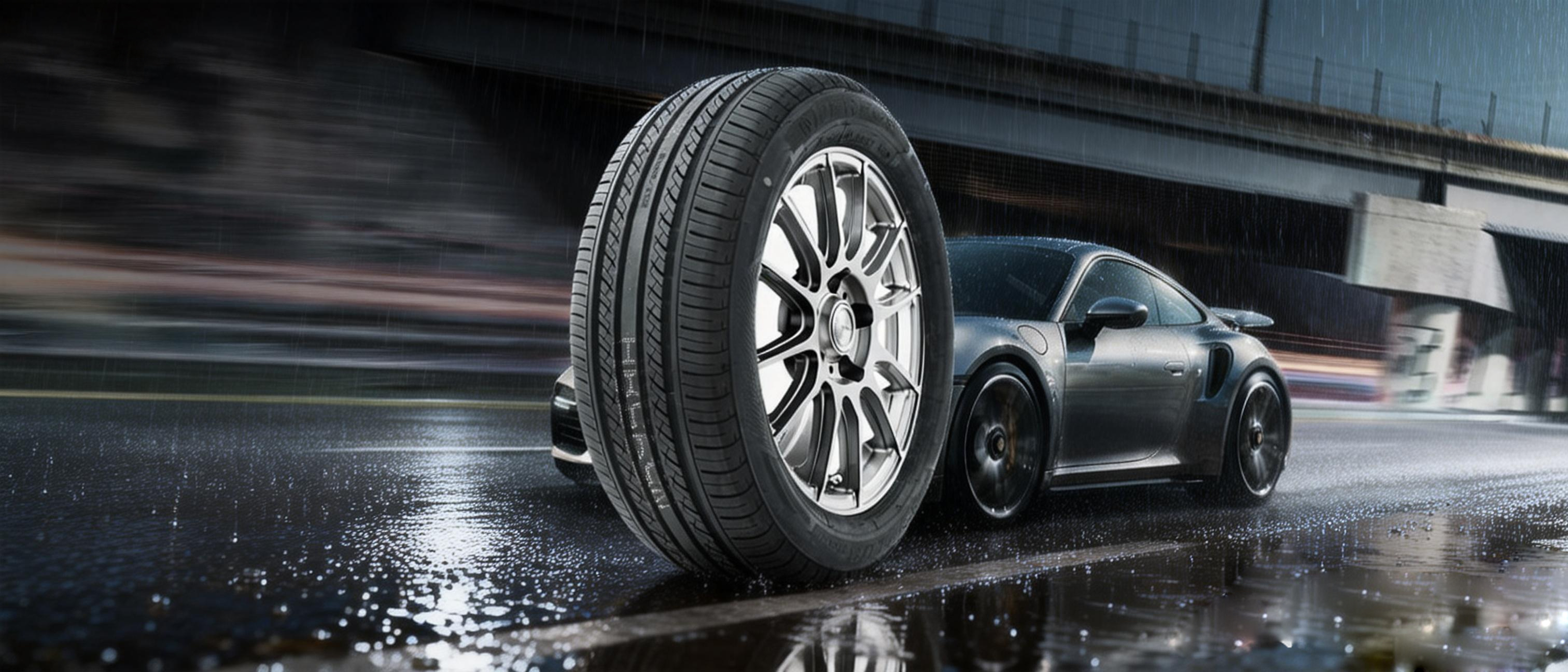
Comprehensive Grip Requirements for Complex Road Conditions Wet roads are not just about standing water; they can also be mixed with mud, loose gravel or snow-melting agent residues. Tyres need to handle these complex conditions with low adhesion and multiple media, providing stable and predictable handling performance.
Rubber Performance in Low-Temperature Environments Wet conditions often come with low temperatures. The rubber of ordinary passenger car tyres hardens in low temperatures, resulting in reduced grip. Tyres optimized for wet roads usually adopt special low-temperature compound formulas, which keep the rubber soft and elastic in cold environments, thus maintaining excellent contact area and grip performance. NEREUS TYRE focuses on all-season adaptability in its rubber compound formulation. Its tread rubber maintains optimal hardness across a wide temperature range, ensuring reliable grip for this all season tyre even on wet roads during chilly spring or autumn days. Key Features to Look for When Choosing Tyres for Wet Roads
Superior Water-Draining Tread Pattern Design Wide and Deep Main Grooves: This is the fundamental guarantee for quickly evacuating large amounts of water between the tyre tread and the road surface. The NS317, as a PCR tyre, features prominent wide main grooves with high water drainage efficiency. Multi-Angle Lateral Grooves and Fine Sipes: These designs can cut through water films, channel water into the main grooves, and enhance adhesion on muddy or light snow-covered roads. The well-designed sipe pattern and lateral groove layout of the NS317 effectively boost water-breaking and grip capabilities of this highway terrain tyre.
Asymmetric or Directional Tread Patterns: Such designs are usually optimized for wet performance. The asymmetric tread pattern of the NS317 is one of its core advantages in handling wet roads.
Advanced Tread Rubber Compound Formulation High Silica Content or Special Polymer Compounds: These formulations can effectively reduce rolling resistance of performance tyres on wet surfaces, while enhancing the engagement with the micro-rough structure of the road surface to shorten wet braking distances.
All-Season Adaptable Compounds: These ensure the rubber does not harden under low-temperature and wet conditions, just like the technology adopted by NEREUS, making the tyre a reliable all season tyre.
Balanced Structural Rigidity Robust Shoulder and Tread Block Design: Reinforced shoulder structures and independent tread blocks prevent tyre deformation during cornering, providing precise steering feedback and avoiding the "floating feeling" when turning on wet roads. The reinforced shoulder design of the NS317 is developed based on this core requirement, making this comfort tyre also excel in handling stability.
Optimized Contact Pressure Distribution: Through tread and structural design, the pressure between the tyre tread and the road surface is evenly distributed, improving grip efficiency per unit area.
NEREUS NS317: Engineered for Variable Wet Road Conditions As a manufacturer dedicated to performance tyres R&D, Qingdao Dichen Tyre has launched the NEREUS NS317 pattern — an all-around PCR tyre targeting mid-to-high-end sedan tyres users who pursue safety and comfort. It fully integrates wet road performance requirements into its design, and stands out as both an excellent comfort tyre and a reliable highway terrain tyre for daily commuting.
Selection Recommendations and Summary Clarify Your Needs: If you live in an area with frequent rainfall and wet roads, or need to drive on light unpaved muddy roads occasionally, all season tyres or summer passenger car tyres focusing on wet performance like the NEREUS NS317 are ideal choices.
Check Specifications and Certifications: When selecting tyres, verify that the tyre size, speed rating and load index match your vehicle. Prioritize passenger car tyres products with high wet grip ratings.
Check Specifications and Certifications: When selecting tyres, verify that the tyre size, speed rating and load index match your vehicle. Prioritize passenger car tyres products with high wet grip ratings.
Daily Maintenance and Replacement Tyre Daily maintenance is the key to ensuring optimal tyre performance on wet roads. Even performance tyres require regular care to deliver their best functionality. It is recommended to check tyre pressure once a month and ensure it complies with the vehicle manufacturer’s specifications — overinflation tends to reduce the tyre’s contact area with the road surface, while underinflation accelerates tyre deformation; both scenarios will compromise wet-road grip and handling stability. Meanwhile, regularly remove stones and debris trapped in the tread grooves to prevent clogging of water drainage channels.
When it comes to replacement tyre, focus closely on tread wear conditions: when the tread depth reduces to 3 millimeters, the tyre’s water evacuation capability and wet grip will decline sharply, and replacement is advised promptly. If the tread wears down to the legal limit of 1.6 millimeters, the tyre must be replaced immediately — do not continue using it under any circumstances. In addition, if the tyre shows abnormalities such as bulges, cracks, or irregular wear, or has been in use for more than 5 years, replacement should be considered even if the tread depth is still sufficient, so as to fundamentally avoid driving risks on wet roads.
Frequently Asked Questions
Q: How does a tyre's drainage system work?A: An efficient drainage system is the core of tread pattern design. Wide and deep longitudinal main grooves are responsible for quickly channeling away large volumes of water, while lateral grooves and fine sipes are used to break through the remaining water film, provide edge grip, and expel secondary water. It's akin to equipping the PCR tyre with a "micro water channel network" — a design that is also a hallmark of top-tier low noise tyres and comfort tyres for enhanced wet-road safety and ride quality.
| Phone : | +86-532-85861980 |
|---|---|
| Fax : | +86-532-85861980 |
| Email : | info@ditriptyre.com |