
- Home
- >
- News
- >
- Company News
- >
- How to Choose the Right Tires? 90% of Car Owners Make a Mistake in the First Step
How to Choose the Right Tires? 90% of Car Owners Make a Mistake in the First Step
* Common Misconceptions about Tire Selection
* Summer Tires: Balancing Grip and Durability
* Winter Tire Selection: Studded vs. Studless
* All-Season Tires: A Panacea or a Trap?
* Deciphering the Secrets of Tire Sidewalls
* Brand, Pricing, and the Balance
* Summary and Key Recommendations

One in two drivers chooses the wrong tires. 90% of online advice is empty talk. Everyone says "choosing the right tire is important," but no one explains where to begin.
First, I want to emphasize that there is no magic bullet. Blindly pursuing brand or low price will only lead to disappointment.
You shouldn't start with the brand, but with your driving environment.
Summer Tires: Speed is Important, but Durability is Equally Essential
The main development trends for modern summer tires are low rolling resistance (improving fuel economy) and hydroplaning resistance (enhancing wet safety).
However, an important detail needs attention: tires with a wet grip rating of "A" usually have a softer tread. They offer better braking performance, but also wear out faster.
Therefore, the following parameters are particularly important for heavy vehicles, crossovers, and electric vehicles:
· Load index
· Speed rating Ignoring these parameters can easily lead to tire overheating, and even tire punctures at high speeds.
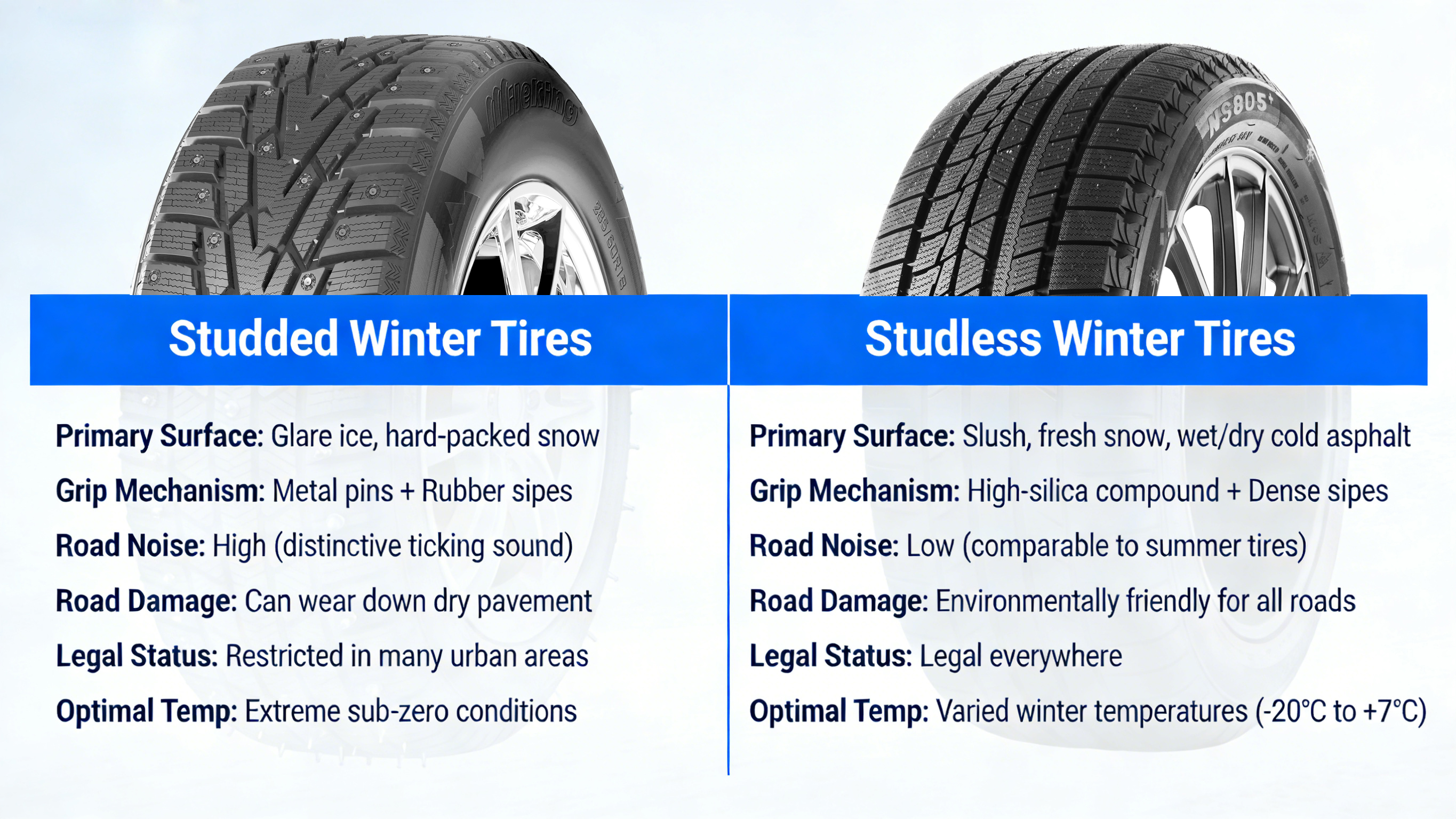
The History of Winter Tires: Studded Winter Tires vs. Studless Tires
The Eternal Debate—Which is Better?
Studded Winter Tires
Unparalleled on ice and deep snow.
Great for areas where roads are not cleared promptly.
Disadvantages: Noisier on clean asphalt.
Studless Tires
Perform better in temperatures near freezing and on wet snow and muddy roads.
Suitable for large cities where roads are cleared promptly.
When choosing, consider not only price but also the climate suitability of the tire design.
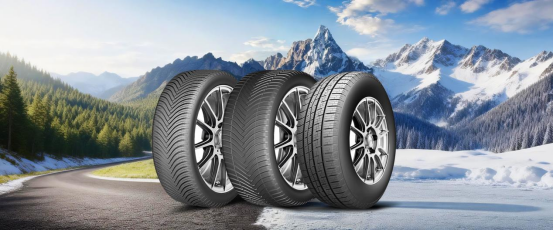
All-Season Tires: A Panacea or a Trap?
The answer is simple:
They are a compromise, not a cure-all.
All-season tires perform reasonably well in temperatures above +7°C and with only a small amount of snow. However, they become almost completely ineffective on icy roads.
I've seen many all-wheel-drive (AWD) SUV owners who firmly believe that all-season tires are sufficient for any winter road conditions.
But the reality is: their braking distances are longer, and their handling is far inferior to their neighbors who use standard—and specifically designed for—winter tires.
For heavier electric vehicles and crossovers, all-season tires are often a risky choice.
Conclusion: Using all-season tires is only reasonable in the following situations:
You don't have enough space to store two sets of tires.
The local winter is short and mild.
You drive with a very cautious and steady style.
Other than these situations, having two separate sets of tires—one for summer and one for winter—is a wiser and more cost-effective choice, both in terms of safety and economy.
What do the markings on the tire sidewall actually mean?
Everyone knows about tire sizes like "205/55 R16".
However, for most people, index codes like "91V" or "95H" seem somewhat mysterious.
The first digit represents the "Load Index."
91 = Maximum load capacity per tire: 615 kg.
95 = Maximum load capacity per tire: 690 kg.
For C-segment sedans, a load index of 91 is usually more than sufficient.
For SUVs and station wagons when fully loaded, tires with a load index of 95 or higher are required.
The following letters represent the "Speed Rating."
H = Maximum speed 210 km/h
V = Maximum speed 240 km/h
W = Maximum speed 270 km/h
Installing tires with a speed rating lower than the car manufacturer's recommended standard not only poses a safety hazard but is also illegal.
In addition, you'll see some US standard markings on the tires:
Treadwear (wear resistance index) – Durability
Traction (traction index) – Grip performance
Temperature (temperature index) – Temperature resistance
"Treadwear 400" means that the tire's wear life is 4 times that of a standard tire. However, it's unfair to directly compare one brand's "Treadwear 400" with another brand's "Treadwear 380."
This is because each tire manufacturer has its own independent testing methodology.
Brand, Pricing, and the Balance
The best tires aren't necessarily the most expensive or the most well-known.
The best tires are those best suited for *you*.
If you don't frequently drive on the track, you don't need to pay an excessive premium for high-performance "super sport" tire features.
Standard summer tires often offer better ride comfort, lower road noise, and longer lifespan.
If you're looking for a reliable tire—especially one tailored for city commuting, highway driving, and crossovers—consider the Ditrip brand.
Since its founding in 2012, the brand has sold its products in over 100 countries and regions worldwide.
Even under frequent, high-intensity use, these tires maintain a lifespan of 2 to 3 seasons; they offer significantly improved safety on wet roads compared to cheap, dubious alternatives.
You can visit the official website to learn more about the brand's full product lineup: ditriptyre.ru
In summary, choose tires based on your actual driving conditions, not just brand recognition.
Summer tires should strike a balance between grip and durability.
For winter driving conditions, a set of dedicated winter tires (whether studded or studless/friction tires) is the best option.
All-season tires are essentially a compromise and not a one-size-fits-all solution.
Always carefully check the tire's load index and speed rating. Don't skimp on safety. Choosing the right tires can not only save you fuel and maintenance costs, but more importantly, it can effectively protect your health and safety.
| Phone : | +86-532-85861980 |
|---|---|
| Fax : | +86-532-85861980 |
| Email : | info@ditriptyre.com |