
- Home
- >
- News
- >
- Product News
- >
- Chinese Winter Tires: Technology and Durability?
Chinese Winter Tires: Technology and Durability?
Table of Contents
Where Did This "Chinese" Tire Boom Come From?
Durability: Misconceptions and Real Data
Technology: Copying or Independent R&D?
In Practice: What to Pay Attention to When Choosing?
Conclusion: Are They Worth It?
I often hear the same question: "Are Chinese winter tires really any good?" Typically, people are skeptical, believing that low price means the tires are not durable and perform terribly on ice. I must point out immediately: this view is outdated. That's right, ten years ago, one might have said there was a noticeable lag in Chinese tire technology, but now the situation is different. The problem is also different: the market is flooded with various brands, and discerning which represent genuine technology versus which are just pretty labels on old "all-season" tires has become the main challenge for dealers and savvy buyers.
Where Did This "Chinese" Tire Boom Come From?
Simply put: the vast domestic market and fierce competition have forced Chinese tire manufacturers to learn and progress rapidly. European standards for fuel efficiency, grip, and noise ratings have not only become a passport to export for many manufacturers but also domestic standards. Factories that once produced existing products are now forced to invest in R&D. I have witnessed this firsthand. When you visit production bases like Qingdao Ditrip Tire Co., Ltd., you no longer see simple workshops but automated production lines equipped with Japanese and German equipment. This is now commonplace.
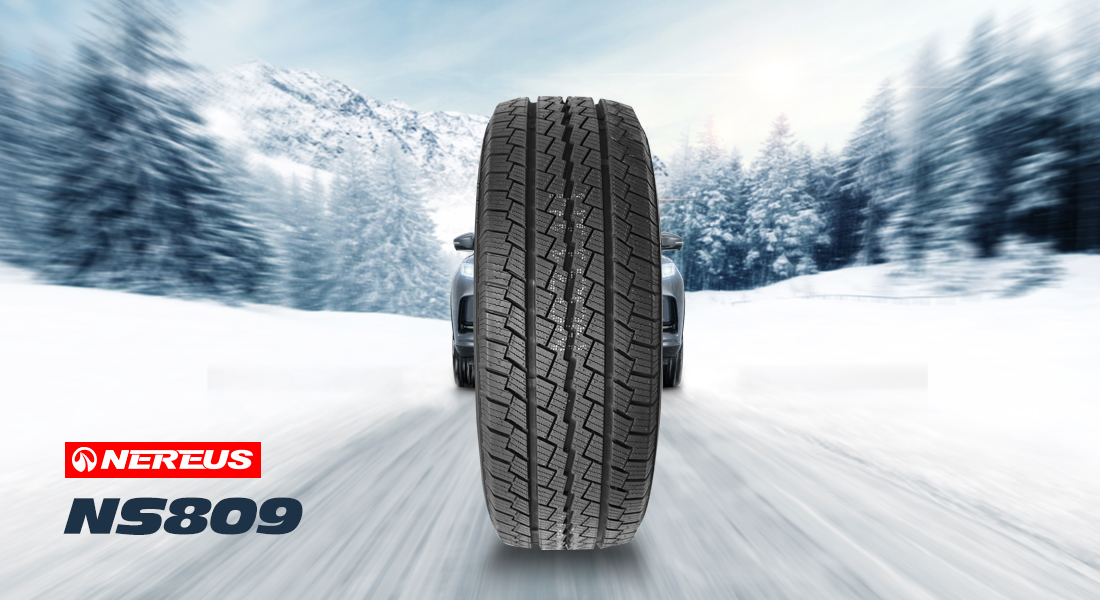
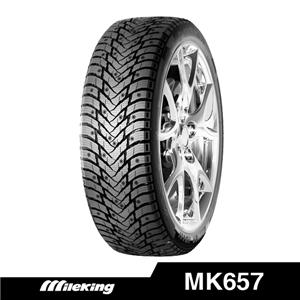
But equipment is only half the story. The key lies in the rubber compound and tread pattern design. In the past, the main criticism was: "The tires harden at low temperatures." Today, leading Chinese tire brands procure highly dispersible silica and special oils for their top-tier tires from the same suppliers as Europe. Differences in formulation still exist, but this is no longer the critical issue. The sipes on the tires have become more complex—no longer just simple straight sipes, but multi-layered sipes with micro-grooves for water drainage. Taking Ditrip's winter tires as an example, they come in studded and friction-type models, and their tread patterns clearly "draw inspiration from" top European tire designs, albeit with some adjustments. Sometimes these adjustments are successful, sometimes not.
A practical example: Three years ago, we imported a batch of heavily advertised Chinese-made "sticky" SUV tires. On paper, everything was perfect, and track test results were good. But in a real Moscow winter, with frequent temperature fluctuations, these tires began to "float." The casing wasn't robust enough, and the sidewalls were too soft. This was due to a balance issue in the rubber compound, unable to adapt to our local climate conditions. The manufacturer learned from this, and the next-generation product showed significant improvement. This relates to tire durability—sometimes the issue isn't the tire "wearing out," but its service life being significantly shortened because the rubber compound isn't tailored for specific operating conditions.
So, How About Tire Durability? Misconceptions and Truth
Here, we need to distinguish between two aspects: tread wear and "aging" of the rubber compound. For many Chinese-made tires, the former is now entirely acceptable—achieving the normal mileage for winter tires, which is about 4-5 winters with careful driving, is completely feasible. They use quite wear-resistant rubber compounds. But the latter is more complex.
"Aging" refers to the loss of elasticity and "hardening." This depends on the quality of the synthetic rubber and protective additives (antiozonants). Budget tires still have issues in this area. A tire might still have decent tread after two winters, but the rubber feels like plastic, and wet grip drops sharply. This is the main hidden risk. Therefore, I always advise not to just look at the cheapest in the catalog, but to focus on a brand's mid-range products. For example, Qingdao Ditrip Tire Co., Ltd. offers both its own brand tires and tires OEM'd for well-known manufacturers. In terms of rubber durability, their high-end brands can rival the entry-level products of major international companies. But their cheapest models carry certain risks; these tires are more suitable for regions with mild winters.
Another point is quality consistency. In the past, tires from the same batch could have varying rubber hardness. Now, reputable factories are working to solve this. Statistical Process Control (SPC) is being widely adopted. But if you buy tires from an unknown "shell company," the risk remains high. Always check for the DOT certification mark—the newer the tire, the better, which is a universal rule for tires from any origin.
Technology: Copying or Independent R&D?
Most tire manufacturers started by copying. That's a fact. They borrowed successful patterns, took them apart, and tried to replicate them. But now, many have entered the stage of improvement and even R&D. For example, targeting Eastern European and Russian markets, they emphasize reinforced sidewalls (to prevent cuts) and rubber that performs well on muddy and icy/snowy roads (not just on dry frosty roads like in northern China).
It's interesting to observe the development of tire studs. Initially, they used whatever materials were at hand. Later, they started licensing high-quality studs from Finland or the Czech Republic. And now, their own independently developed products—composite studs—have emerged.
| Phone : | +86-532-85861980 |
|---|---|
| Fax : | +86-532-85861980 |
| Email : | info@ditriptyre.com |