
- Home
- >
- News
- >
- Product News
- >
- Studded Winter Tires – Guardian of Icy Roads
Studded Winter Tires – Guardian of Icy Roads
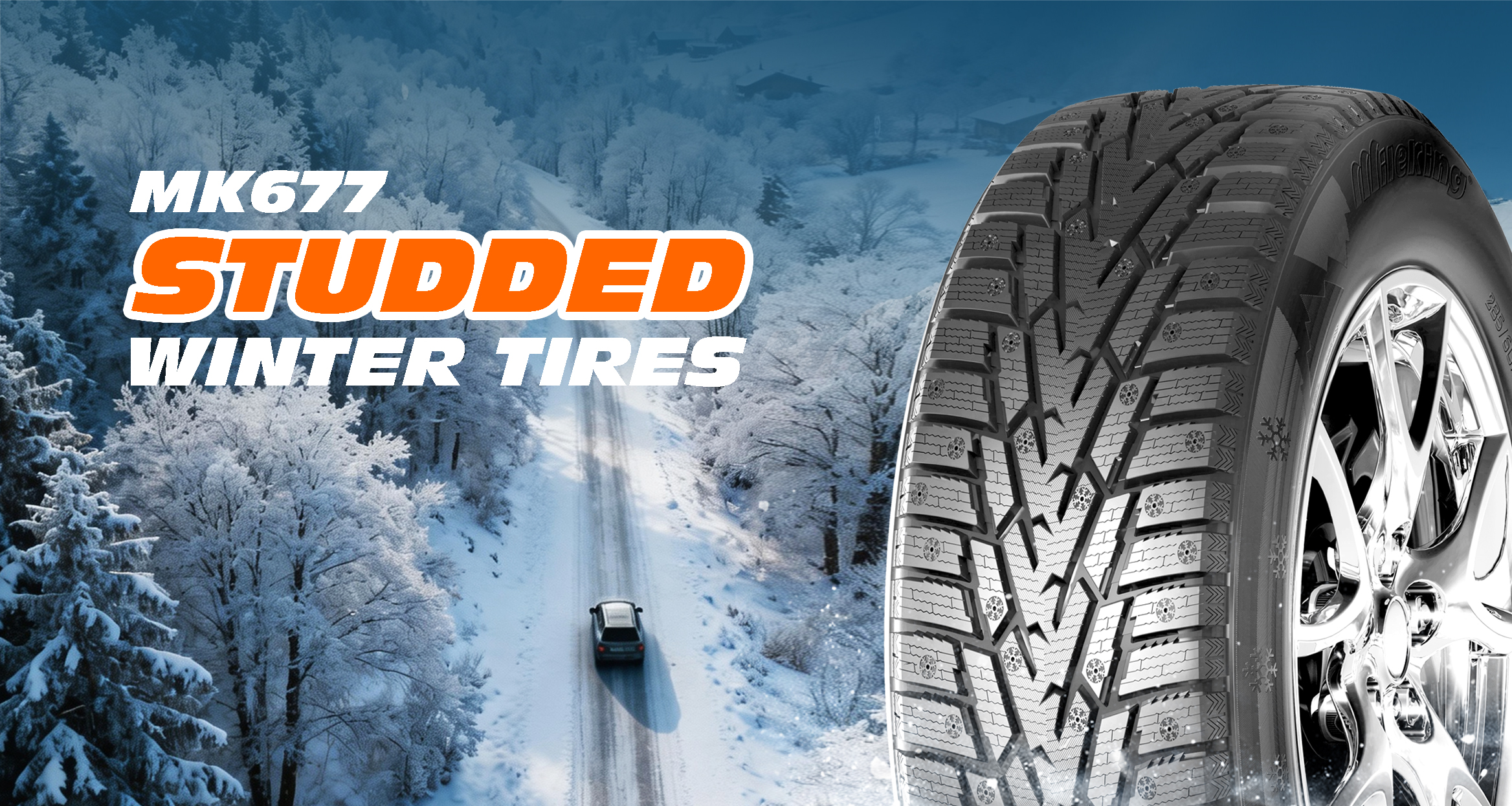
When winter come with it freezing temperatures and heavy snow, the roads will surface with slippery ice. Under these bad road conditions, driving safety becomes very important for every driver. On such harsh climate, 4seasons and summer tyres lose their grip as the tire tread will become harder; even studless snow tires struggle to face the challenge of slick ice road. In these condition that studded winter tyres—Excellent by their unique design and exceptional performance—emerge as the ultimate source of confidence and protection for drivers in frigid regions.
1. What Are Studded Winter Tires?
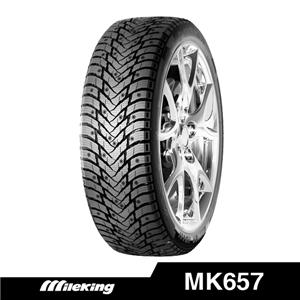
The primary function of studded winter tires is to handle icy and snowy road conditions in extremely cold climates. In terms of manufacturing, studded winter tires feature hundreds of high-hardness metal studs embedded directly into the rubber tread during production; this enhances their grip, making them suitable for use in frigid countries with prolonged winters—such as those in Northern Europe, Russia, and Canada.
Compared with regular non-studded winter tires, the core strength of studded tires lies in mechanical road gripping.
2. Applicable Scenarios & Usage Precautions
2.1 Applicable Scenarios: Built for Icy Roads
Studded winter tires are not ideal for all winter regions; their full advantages come into play most prominently on sheer ice surfaces:
· Extremely cold regions: Northern Europe, Russia and similar areas with months-long frozen roads and compacted snow, fully unlocking the mechanical grip advantage of metal studs.
· Mountainous & hilly icy roads: Frequent cornering and braking demand extreme traction; studded tires effectively reduce risks of sideslip and loss of vehicle control.
· Early morning & nighttime driving: Roads reach their lowest temperatures with the smoothest ice glaze during these hours, making the anti-slip performance of tire studs absolutely essential.
2.2 Critical Usage Taboos
Do not use year-round :This is the most important rule. On dry, ice-free paved roads, metal studs serve no practical function but wear out rapidly, loosen and fall out, shortening tire service life. Meanwhile, the studs act like chisels and damage road surfaces — the key reason many regions enforce seasonal usage restrictions.
Strictly Use it within the specified periods: In most severe cold regions, the permitted usage time for studded winter tires generally runs from November to next year April or early May; but the actual time should be adjusted according the snow and ice melt conditions. If the weather continues to warm up and all snow and ice have completely melted, drivers must promptly switch to all seasons tyres or summer tires to reduce tire wear and driving hazards.
Obey the local laws and regulations: Some regions have specific regulations on the use of studded winter tires; you must strictly adhere to the correspondingly local laws and regulations.
Prohibit speeding when using studded tires: Even installed the studded winter tires, driving at excessive speeds on slippery and icy roads can still cause to dangerous accidents. So you must keep a low and steady speed while driving and keep a safe distance from the vehicle ahead.
3. Selection & Maintenance of Studded Winter Tires
(I) Key Buying Considerations: Focus on Core Indicators
Look for the "Snowflake and Mountain Peak" certification symbol (3PMSF) to ensure the product is a certified winter tire.
Confirm the metal stud status: Focus on the stud material, installation quantity and arrangement design. For example, normal passenger car tyres, Installing 120 to 180 studs is enough; installing too many or few can influence both grip and drive comfort. In addition, check the studs' status to ensure there are no risks of loosening or fallen out, and confirm that the stud protrusion height complies
with safety standards.
Choose the right tire according to your vehicle and road conditions: for example, SUVs are better suited for wider treads tyres and a more uniform distribution of studs.
(II) Routine Maintenance: Extending Service Life
Timely removal and proper storage :After winter use, remove studded tires, clean and dry them completely. Store removed tires in a cool, well-ventilated area away from direct sunlight to slow down the rate of aging and weathering. Furthermore, when storing tires, inflating them to an appropriate pressure can effectively prevent deformation.
Regular inspections: During use, the tires should be inspected regularly to check for wear on the tread and studs,whether the studs have become loose or detached, and if necessary, should replaced promptly.
Standardize Driving Habits: To minimize wear on the tread and studs, should, as much as possible, avoid or reduce driving at high speeds for extended periods on dry, snow-free, and ice-free road surfaces. When starting, accelerating, braking or turning, you should drive as smoothly as possible and avoid sudden braking or abrupt stops; this not only effectively enhances the anti-slip performance of studded winter tires but also extends their service life.
| Phone : | +86-532-85861980 |
|---|---|
| Fax : | +86-532-85861980 |
| Email : | info@ditriptyre.com |