
- Home
- >
- News
- >
- Product News
- >
- Summer vs All Season Tyres: A Dealer Guide for NEREUS Cambodia Made Range
Summer vs All Season Tyres: A Dealer Guide for NEREUS Cambodia Made Range
At the retail counter, a customer may walk in searching for summer tyres. Their main concern is usually sharp handling and reliable grip on hot, wet roads. Another buyer comes in asking for all season tyres; they want one single set to cover all road conditions year round. It is common for shoppers to mix these two categories up during casual talks. Yet these two tyre families are engineered to solve completely different driving challenges. You need to evaluate the driver’s local road conditions first, then check the actual tyre model and its sidewall markings before giving solid recommendations.
Why these two tyre categories create confusion at the counter
Neither category label alone tells you if a tyre fits a customer’s use case. Summer tyres form a focused performance group built for warm weather. All season tyres cover a much broader operating window and are increasingly popular across European markets. This simple difference sets the foundation for every sales conversation. Even so, naming alone cannot describe the full performance limits. The exact tread pattern, certification marks and daily driving environment carry far more weight.
Summer tyres: built for warm weather performance
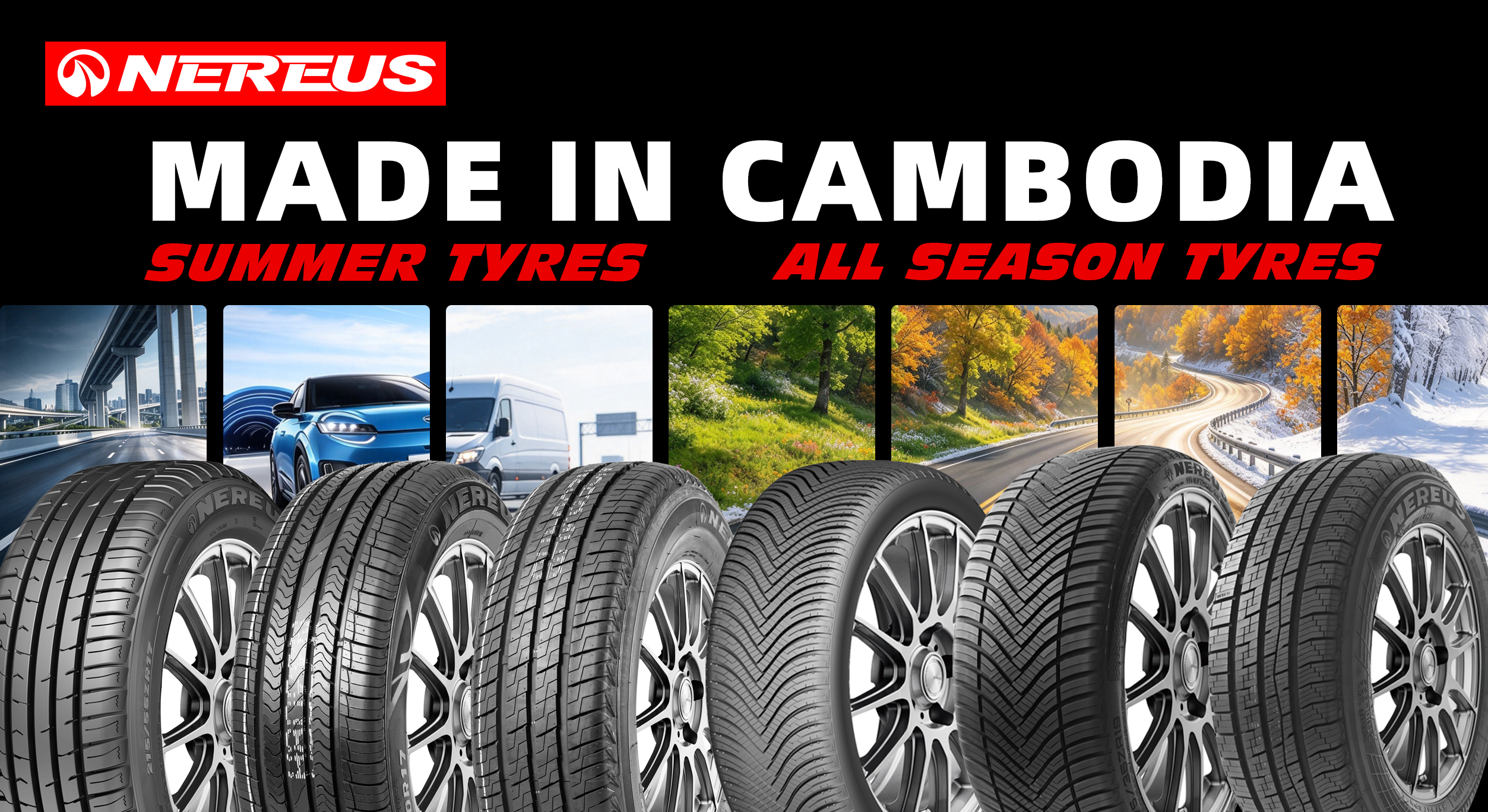
Tyre makers design summer tyres for dry asphalt and rainy conditions in mild and hot climates. Safety guidance reminds dealers that summer tyres lose traction quickly once temperatures drop below freezing, and they are never intended for heavy snow or ice. For shop sales, this label means targeted warm weather performance. It does not tell you how a specific tyre will behave on cold, wintry roads. Our NEREUS summer range is manufactured at our Cambodia facility, bringing notable tariff advantages for European importers. This lineup includes three distinct treads for separate vehicle types and driving scenarios. SAILFISH NS601 is our UHP summer option for sport sedans and high power coupes, balancing confident dry and wet grip with precise steering feel. DYNTRAC is a premium touring tyre built for passenger cars, crossovers and luxury SUVs, capable of dry, wet and light snow use with cross hatch sipes and four main drainage grooves to reduce aquaplaning. NS916 targets European delivery fleets and light commercial vans, built for high speed routes, long mileage, stable highway tracking and low noise for long shift drivers.
All season tyres: built for flexible year round use
Shoppers asking for all season tyres usually hope to skip seasonal tyre swaps. They want one tyre that works safely through cool damp days, rain and occasional light snow. Just the product name cannot guarantee real world performance. You must check the sidewall marks, confirm correct fitment, and ask the buyer how often they face harsh winter conditions on their regular route. This single question changes everything. A driver who only sees light rain and rare flurries has very different needs from someone who regularly travels over snow covered, icy hills.
Road conditions matter more than the tyre category name
A buyer may ask whether all season tyres can work in snow. This question needs more than a quick category comparison. Find out their typical local temperatures, how often snow or ice appears, and whether their route includes steep slippery slopes. A one off light snowfall is not the same as daily winter commutes on snow packed roads; these two scenarios demand entirely different traction levels. Even when a customer is shopping for passenger cars, SUVs or delivery vans, the vehicle specification check cannot be skipped. Always refer to the factory tyre sticker. Tread names do not override the approved tyre size, load index and speed rating requirements.
This simple counter checklist keeps your advice practical and avoids overpromising:
Ask what the driver expects from year round use: mild seasonal shifts, consistent cold days, or frequent heavy snow and ice?
Confirm the vehicle’s approved tyre size, load index and speed rating before discussing any tread pattern.
Check the physical markings on the exact model and size. Do not assume performance from the product family name alone.
State clear boundaries if deep snow or glazed ice is a regular part of their commute.
Safety warnings also apply to summer tyres. They are not engineered for freezing weather, snow or ice. Dedicated winter tyres still outperform all season options in continuous deep snow. Keep your advice focused on the tyre’s real limits, and avoid pushing every customer into a winter tyre upgrade unnecessarily.
Sidewall markings offer more reliable evidence
When a customer raises winter use questions, sidewall markings are far more trustworthy than broad category names. The Three Peak Mountain Snowflake (3PMSF) symbol proves the tyre has passed formal snow traction testing. Even with this mark, it cannot deliver flawless grip on every icy road, nor will it automatically fit every vehicle. You should only explain what this certification actually covers.
Make sure you separate M+S and 3PMSF clearly. These two markings do not mean the same thing. M+S only indicates basic mud and snow tread geometry. It does not meet the strict snow traction test standards required for 3PMSF. Local winter traffic laws interpret these marks differently across regions, so distributors must verify local regulations before making any legal performance claims. A 3PMSF marking does not fix fitment issues. The tyre must match the vehicle’s approved size, load and speed specs. Tyre pressure guidance follows the vehicle manufacturer’s sticker or handbook, not the maximum pressure printed on the tyre sidewall.
NEREUS ClimaRide series shows why category and certification need separate checks. These all season patterns are produced at our Cambodia factory and carry both M+S and 3PMSF certification. This combination is a strong selling point for temperate markets, yet it does not mean these tyres can handle heavy ice or severe snow routes like dedicated winter tyres.
How to explain performance without overpromising
Dealers can structure customer conversations around three key points: tyre category, sidewall certification and the driver’s daily route. A category sets general expectations. A certification mark provides verified test evidence for that specific model. The driver’s real world weather conditions decide whether the tyre fits their needs. Leaving out any one piece creates risk, and may lead to unsafe claims about winter performance.
| Client request | Items to verify | Cautious response |
| Performance summer tyre for sport vehicles | Exact size, load/speed rating, local climate (no regular heavy snow) | NS601 delivers balanced UHP wet and dry grip for warm weather driving; it is not built for freezing or snow covered roads. |
| Quiet touring tyre for SUVs with occasional light snow | Vehicle fitment, typical snow depth, local winter rules | DYNTRAC works reliably on dry, wet surfaces and light snow. It is a touring option, not a dedicated winter tyre for heavy snow zones. |
| Durable van tyre for European delivery fleets | Load capacity, mileage goals, noise requirements | NS916 is optimized for high speed light commercial routes, with long tread life, stable handling and low road noise. |
| One all season set for year round driving | Exact ClimaRide model (AS3/AS7/Asvan), M+S / 3PMSF marks, snow severity | ClimaRide all season tyres carry dual certification for moderate winter use. Confirm local snow and ice exposure before recommending. |
| Load bearing all season tyre for delivery vans | Load index, axle weight, local winter regulations | ClimaRide Asvan is reinforced for loaded vans, with M+S and 3PMSF markings; check regional winter equipment rules before fitting. |
The ClimaRide family makes it easy to show customers that all 3PMSF all season tyres are not identical. AS3, AS7 and Asvan all hold M+S plus 3PMSF marks, but their intended applications and tread details differ. AS3 and AS7 are designed for passenger cars and compact SUVs. Wide angled horizontal grooves evacuate standing water quickly, fine sipes preserve crisp dry road response, and tuned pitch sequencing reduces road noise for everyday comfort. ClimaRide Asvan is built for loaded vans and heavy use family SUVs, with rigid shoulder blocks and longitudinal grooves to maintain stability under payload. Its custom compound stays consistent through hot summer heat and cold damp winter days. Shared certification does not mean every pattern offers identical performance for every vehicle type.
Manufacturing note: NEREUS tyres made in Cambodia
All NEREUS tyres featured in this guide are produced at our Cambodia production site. This manufacturing location brings a major sourcing advantage for European importers and buyers from markets that impose anti dumping or anti subsidy duties on China origin tyres. There is no anti dumping tax, anti subsidy tax or import tariff for European imports, helping distributors improve landed cost and margin control. Our full lineup extends past summer and all season tyres; dedicated winter tyres are also available. New and existing customers are welcome to confirm orders early to lock production slots and arrange smooth shipment.
Summary
Solid dealer advice always starts with the driver’s regular weather and road conditions. Next, confirm the sidewall markings and official vehicle fitment requirements. Labels like summer or all season are only general descriptions. They can never replace the tyre’s actual tread design, certification and load speed limits. If deep snow or thick ice is a daily occurrence, state the tyre’s boundaries clearly and rely on its official test evidence. For product specification, pricing or fitment questions, please visit our contact page. Our team will help you match the correct NEREUS pattern for your market and customer’s vehicle.
FAQ
What separates NEREUS summer tyres from all season tyres? Summer tyres including NS601, DYNTRAC and NS916 are tuned for warm dry and wet roads, with no design focus for freezing temperatures or heavy snow. ClimaRide all season tyres carry M+S and 3PMSF certification for moderate year round use, though they still have limits on heavy ice and deep snow.
Does every all season tyre carry the 3PMSF symbol? No. Never assume certification based on the product category name. Always check the sidewall of the exact model and size. Each mark only stands for the performance standard it has passed.
Can all season tyres have both M+S and 3PMSF marks? Yes. NEREUS ClimaRide AS3, AS7 and Asvan are all season tyres officially marked with both M+S and 3PMSF. Always check the specific pattern instead of relying on broad category descriptions.
Are all season tyres suitable for deep snow? The all season label alone is not a guarantee for deep snow performance. Official safety guidance confirms dedicated winter tyres outperform all season tyres in continuous deep snow. Drivers facing frequent harsh winter conditions need a separate evaluation.
What should distributors check before recommending NEREUS Cambodia made tyres? Review the customer’s typical weather and route, the vehicle’s approved size, load and speed rating, and the sidewall markings on the exact tyre model. Clearly communicate performance limits. The Cambodia manufacturing origin delivers tariff benefits for importers, but it does not alter the tyre’s on road performance boundaries.
| Phone : | +86-532-85861980 |
|---|---|
| Fax : | +86-532-85861980 |
| Email : | info@ditriptyre.com |